01
A digital strategy is a set of decisions, not a list of channels. It sets what matters, for whom, and when.

Digital strategy for nonprofits that keeps up with your organization.
Red Clay Creative provides digital strategy for nonprofits as an ongoing partnership, not a one-time report. We help you decide what your website, content, search, and marketing should do first, then stay with your team to keep those decisions working.
Let’s work together →
At a glance

Service stage
01 Plan
01
A digital strategy is a set of decisions, not a list of channels. It sets what matters, for whom, and when.
02
Start from organizational goals and audiences, then choose the few channels your team can actually sustain.
03
Sequence the work. Messaging and content ownership usually need to be settled before a redesign or a search push.
04
Measure what leadership reviews, such as program inquiries, volunteer signups, or recurring gifts. Traffic is a signal, not the outcome.
05
Plans drift without a rhythm. Weekly check-ins, quarterly reviews, and an annual plan keep the decisions useful.
Experience
Digital strategy for nonprofits only works if someone keeps it current. We work with your team on a steady rhythm: weekly check-ins on priorities, quarterly reviews of what the dashboard shows, and an annual plan tied to your budget cycle. Organizations including DAP Health, Whitman-Walker, and the Smithsonian Asian Pacific American Center work with us this way, so decisions about the website, content, search, and marketing stay connected.
“One thing I genuinely appreciate is that Red Clay operates like a true partner rather than an outside vendor. They are proactive, adaptable, transparent, and highly collaborative, especially during moments where priorities shift quickly or complex challenges arise.”
Dustin Gruber · Director of Brand Marketing, DAP Health
The challenge
A board deck. A vendor brief. A strategic plan refresh.
Each made sense. None tells your team what to do this week.
It made sense in the boardroom, then sat in a shared drive while daily decisions happened elsewhere.
Your web firm, email platform, and ads contractor each tune their own piece, and nobody connects them.
New leadership, staff turnover, and AI search shift what matters, and nobody owns the update.
Outcomes
A useful strategy is short enough to use every week. These are the parts it needs, whatever size your organization is.
01
Digital priorities connect to your strategic plan, not to whichever channel is loudest.
02
Donors, volunteers, service seekers, members, funders, and your board each need something different.
03
A clear look at what’s working on your website and channels today.
04
A short list of what matters now, what waits, and who owns each piece.
05
A few measures tied to each goal, reviewed on a regular schedule.
What we do
Digital Strategy is an ongoing retainer, not a one-time deliverable. We work with your team on a weekly, quarterly, and annual rhythm, so the plan changes when your organization does.
01
You work with the same Red Clay team over time. We stay close to your programs, audiences, and constraints, so recommendations start from what’s true now.
What takes shape
A dedicated retainer relationship
02
Each year, we build a digital plan around your strategic plan and budget cycle, then break it into quarterly roadmaps. Some decisions come first, like settling messaging before a redesign.
What takes shape
03
Your website, content, search, email, and ads work from the same priorities. We coordinate across web, content, SEO, and marketing, including work another team handles.
What takes shape
04
Weekly check-ins with your primary contact keep priorities aligned and catch issues while they’re small. New requests from development or program staff get weighed against the plan.
What takes shape
Weekly check-ins and priority alignment
05
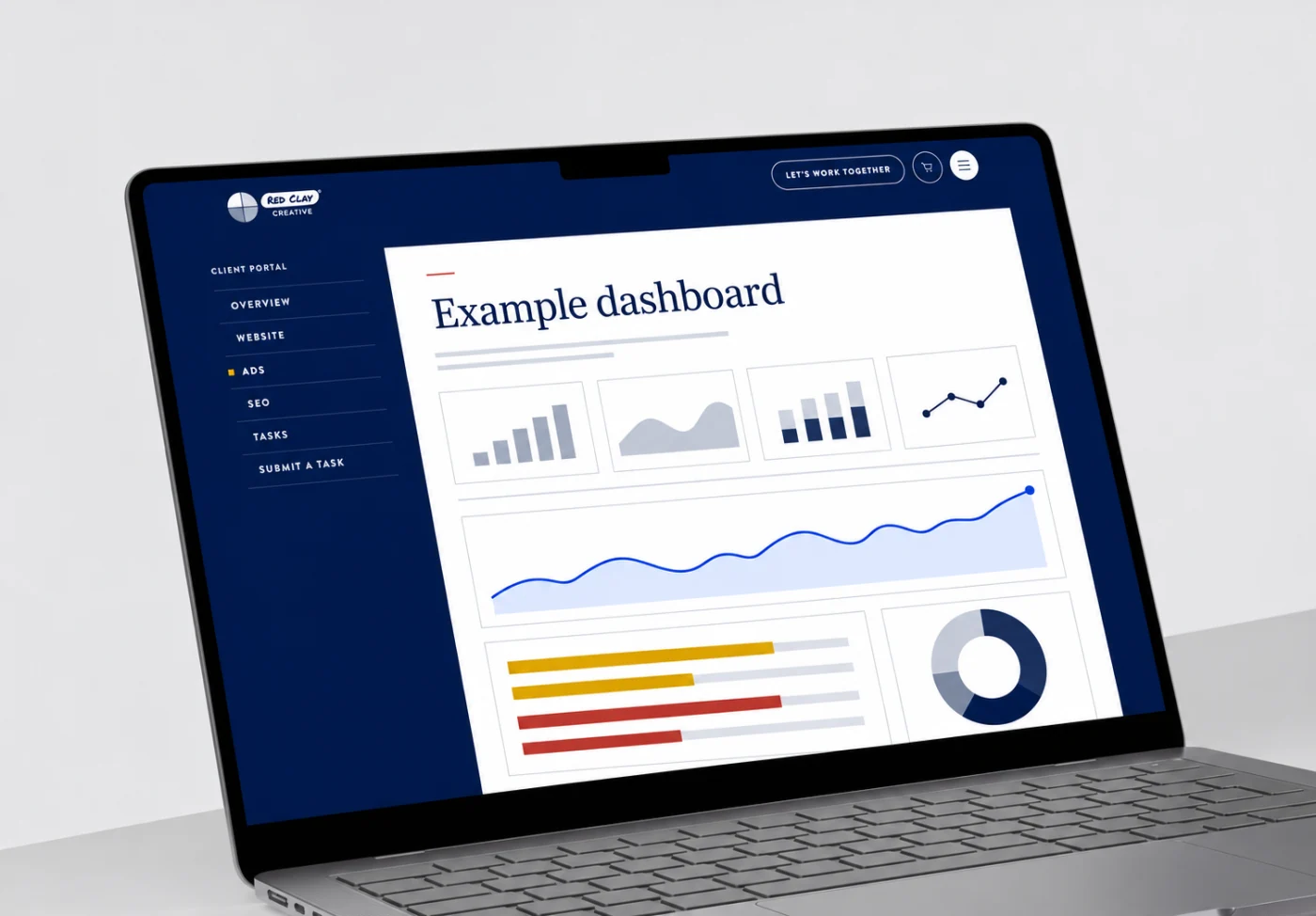
A performance dashboard with AI-powered insights tracks the measures tied to each goal. Each quarter, we review it with you and recommend what to change, including for search and AI.
What takes shape
06
A primary contact, access to your analytics, and the right decision-makers at quarterly reviews. We’ll tell you ahead of time what we need and when.
What takes shape
Clear roles on both sides
How it works
We call our method the Red Clay Digital Strategy Loop. It runs on a schedule, not only when something breaks. You know your organization. We help turn that knowledge into decisions that hold up as things change.
01
We review your goals and strategic plan, what your audiences need, your Google Analytics 4 and Search Console data, and the website, content, and channels you have today. Together, we agree on what has changed.
You get
A shared baseline and audience priorities
02
We tie each request to an organizational goal and an audience, then name the tradeoffs. Your team decides what matters most right now and what waits. Saying “not this quarter” is part of the job, and every priority gets an owner.
You get
A short list of priorities with owners
03
We put the work in order and show what depends on what. Say development wants a clearer giving path, program staff want better service pages, and leadership wants a new homepage. If the messaging isn’t settled yet, the homepage waits.
You get
An annual plan and quarterly roadmap
04
Weekly check-ins keep your team, our team, and any outside vendors working from the same plan. We line up the website, content, SEO, and marketing work so one channel doesn’t undo another, and we flag issues while they’re still small.
You get
One plan everyone works from
05
Each quarter, we review the dashboard against the measures you chose, such as program inquiries, volunteer signups, or recurring gifts. When funding, staff, or search behavior shifts, we reprioritize with you instead of waiting for next year’s plan.
You get
An updated roadmap for the next quarter
Featured work
whitman-walker.org
Client
Whitman-Walker
Partner
Spotted MP
Client since
2021
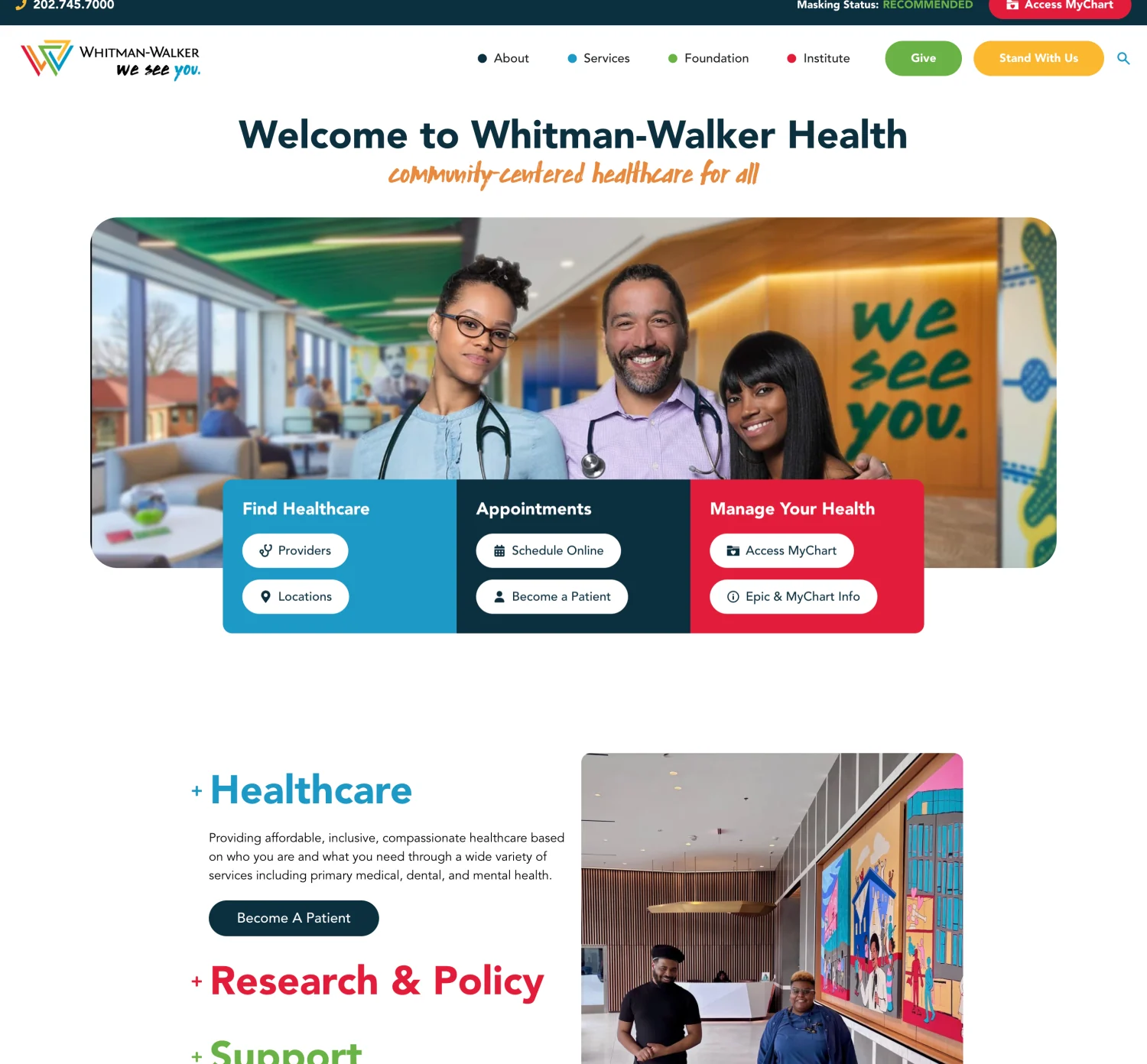
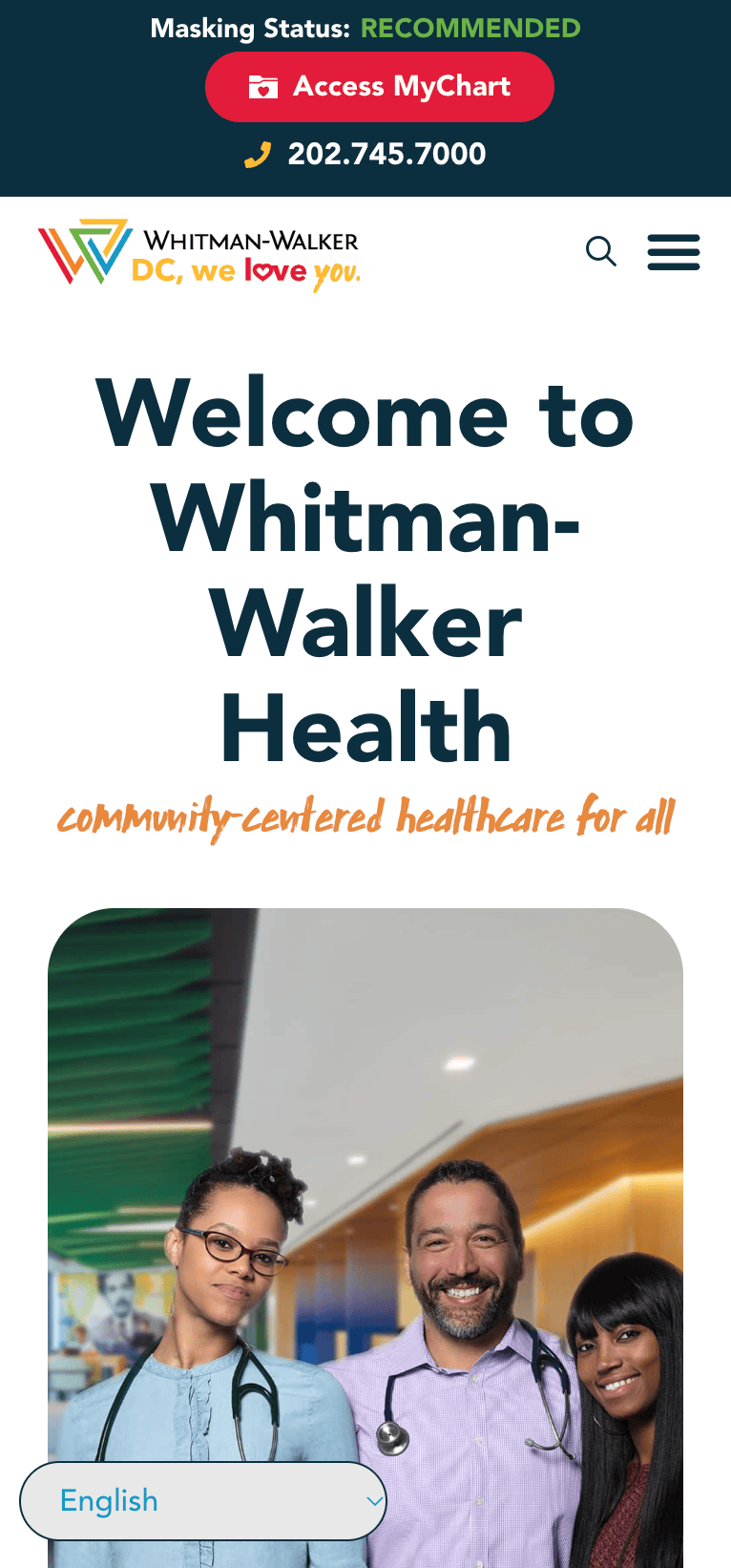
Whitman-Walker has been a client since 2021. Our work spans brand strategy, Digital Strategy, web design and development, graphic design, SEO, and Google Ads.
The relationship began with a question about how the organization explained itself. Whitman-Walker’s work spans care, advocacy, and research, and each pillar serves people who need different things from the same website.
Working with Spotted MP, we conducted research and interviews with leadership, board members, and key stakeholders. That work informed the brand messaging, clarified how the pillars support one another, and led to a strategy for bringing two websites together. Those decisions gave the work that followed a clear direction.
Working together
Each option fits a different situation. The useful question is what’s missing: a plan, advice, someone to own the decisions over time, or more capacity inside your team.
Good for a reset after a leadership change or a strategic plan refresh. Without an owner, it tends to drift.
Strong for advice and an outside view. Implementation usually stays with your team or other vendors.
This is how we work. We own the plan with you and connect it to website, content, search, and marketing work.
Makes sense when there’s budget for a senior role, plus the tools and support around it.
FAQ
A digital strategy for nonprofits is a short set of decisions about what your website, content, search, and marketing need to accomplish, for which audiences, and in what order. It ties those decisions to your strategic plan and gets revisited as priorities change.
Goals connected to your strategic plan, the audiences you need to reach and what each needs, and an honest look at what exists today. It also needs a short list of priorities and tradeoffs, a sequenced roadmap with owners, and a few measures leadership will review.
Start with organizational goals and audiences, not channels. Audit what’s working, decide what matters most and what you’ll set aside, and put the work in order. Then agree on how you’ll measure progress and when you’ll revisit the plan.
Review priorities often enough to catch drift, and revisit the full plan at least once a year. We work on a weekly, quarterly, and annual rhythm, so the plan changes when the organization does instead of waiting for the next board retreat.
A digital strategy decides what your digital work is for, who it serves, and in what order. A digital marketing plan is one part of that, covering channels like email, Google Ads, and social. The strategy tells the marketing plan where to focus.
It depends on what’s missing. A consultant can give you a plan or advice. A nonprofit digital strategy agency working as an embedded partner can own the plan and connect it to the work. A staff hire fits when there’s budget for a senior role.
A dedicated team, weekly check-ins and priority alignment, annual and quarterly digital planning, and a performance dashboard with AI-powered insights. We also recommend changes, flag issues early, and coordinate across web, content, SEO, and marketing. Scope depends on your organization.
Yes, as a planning input. AI Overviews and tools like ChatGPT change how people find answers, which affects which pages matter most. Clear, accurate, well-structured content still does most of the work, and nobody can guarantee AI visibility.
Putting the strategy to work
Turn audience and content decisions into a WordPress website your team can keep current.
Clarify what to say, how to organize it, and which pages help people act.
Google Ads, SEO, and paid social, run against the same priorities and goals.
Let’s talk
Good digital strategy for nonprofits starts with what’s changed. Tell us what your organization is working toward this year, what’s already in motion, and where things keep getting stuck. We’ll talk through what we’d look at first and whether an ongoing Digital Strategy relationship fits your team.