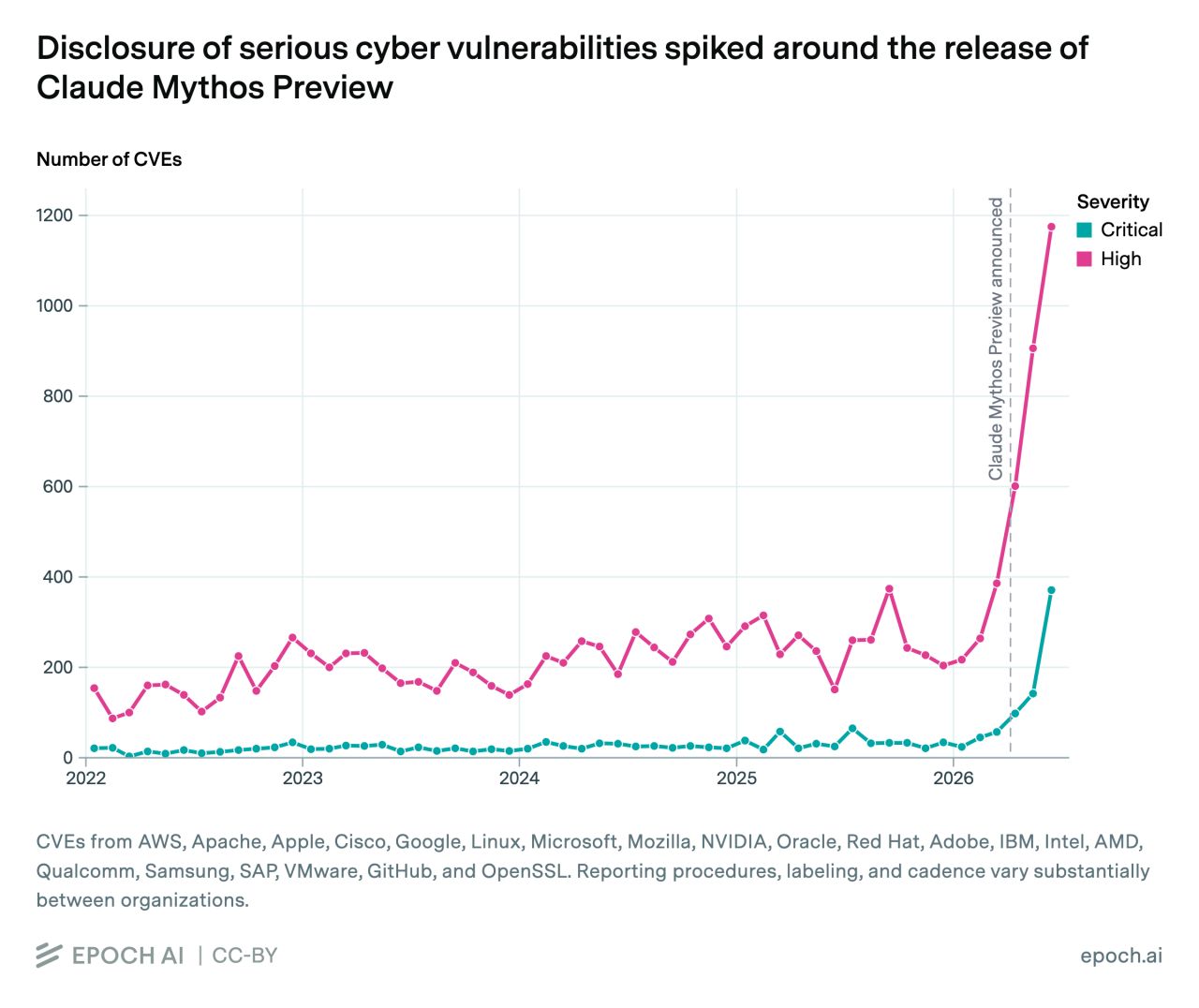
Check out this graph. It shows a big spike at the end.
It’s showing the number of “cybersecurity vulnerability disclosures” from big software organizations over time. This coincides with an increase in the capabilities of A.I.
As A.I. tools improve, they are helping security researchers uncover software vulnerabilities at a pace we’ve never seen before. That seems like it would be good news – finding bugs and fixing them is usually a good thing – but it’s also a window for attackers.
Now, the moment a vulnerability becomes public, AI can help identify every website running the affected software. It can explain the exploit. It can even help the attacker build their attack.
That means patching is no longer something you get to “next week.” It’s something you need to be prepared to do today. The organizations that treat website maintenance as optional are going to find themselves reacting to yesterday’s threats in tomorrow’s world.
If you own or manage a website, here are a few things worth paying attention to:
⚠️ Security patches are becoming more time-sensitive than ever.
⚠️ One outdated plugin can expose an otherwise well-maintained website.
⚠️ Many attacks are now automated. Nobody has to target your organization specifically. Bots are constantly scanning the internet for known vulnerabilities.
⚠️ If you don’t know who is responsible for monitoring and applying security updates, that’s a vulnerability too.
Website security used to be something you could think about from time to time. Today, it requires ongoing attention. The gap between discovering a vulnerability and exploiting it is shrinking, and that’s changing what it means to maintain a website.